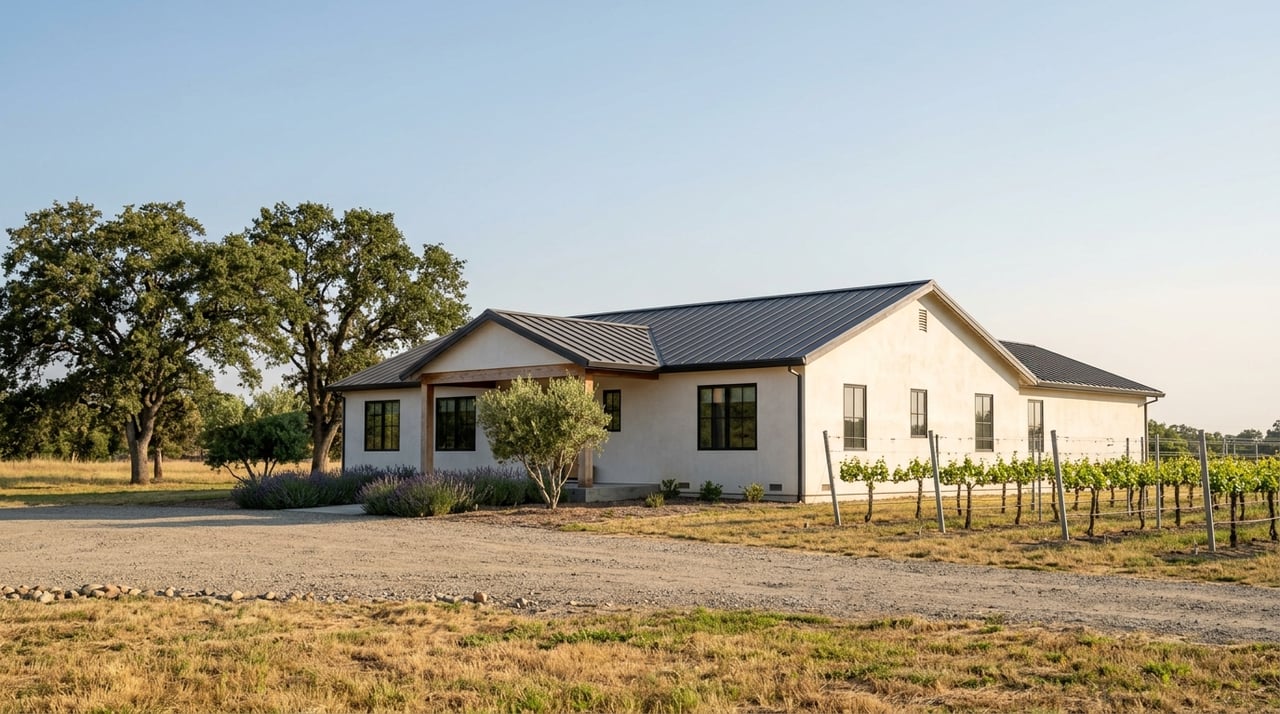
Wondering why selling a ranch or acreage property in Creston feels more complicated than selling a typical home? That instinct is right. When you sell rural property in San Luis Obispo County, buyers are looking at far more than bedrooms and square footage. They want to understand the land, water, access, improvements, and any limits on future use. If you prepare those details early, you can create a smoother sale and a stronger first impression. Let’s dive in.
Why Creston acreage sells differently
In Creston, the land often carries as much weight as the home itself. San Luis Obispo County treats agriculture as a normal and protected part of life in the unincorporated county, and crop production is allowed throughout the county. Grazing is also broadly allowed outside urban and village reserve areas, while some animal-keeping and agricultural processing uses may require permits.
That matters because buyers are not just asking, “Do I like the house?” They are also asking what the parcel can support now, what it may support later, and how local rules affect the property. In a county where agriculture produced more than $1.0 billion in crop value for the fourth straight year in 2024, that context shapes buyer interest in a very real way.
For many Creston properties, the value story includes a mix of residence, land utility, and operating features. A home on 10 or 20 acres is not automatically judged the same way as a larger-lot suburban property. Buyers often compare usable land, water access, infrastructure, and flexibility of use just as closely as they compare kitchens or finishes.
Start with a rural document packet
Acreage buyers usually do more due diligence, and they often do it earlier. If you can hand over organized records up front, you reduce uncertainty and help serious buyers move forward with more confidence.
A strong rural-property packet should give buyers a clear picture of how the property functions. It should also help answer the practical questions that come up during showings, inspections, and negotiations.
Gather water and well records
Water is one of the first things buyers will ask about. San Luis Obispo County says private well water is not regulated or monitored by any outside agency, so the property owner is responsible for water safety.
That makes your well file especially important. If available, gather:
- Well completion report
- Pump and service records
- Recent water-testing results
- Shared well or water-system paperwork
When buyers can review these records early, they have a clearer sense of the property’s setup and maintenance history. That can make the listing feel more transparent and better prepared.
Locate septic records
For rural property, wastewater systems matter just as much as water supply. County Environmental Health focuses land-development review on whether a property has a decent and potable water supply and a safe, sanitary way to remove waste streams.
Before listing, locate any septic or onsite wastewater system documents you have, including:
- Permits
- Installation records
- Maintenance or pumping history
- Inspection or performance documents
Even if your system has worked well for years, buyers will still want documentation. Having it ready can save time during escrow.
Confirm parcel and zoning details
County zoning guidance makes clear that the APN is the key parcel identifier. Sellers and agents are directed to verify parcel location, zoning, planning area standards, combining designations, and recorded maps.
This step is important because recorded maps can include conditions that affect future use. It also helps you present the property more accurately. Instead of relying only on total acreage, it is often more helpful to show where driveways, fences, building pads, and functional areas sit within the actual parcel layout.
Pull restrictions and conservation paperwork
Some rural properties carry long-term land restrictions that buyers need to understand. In San Luis Obispo County, Williamson Act contracts can reduce property taxes in exchange for a 10- or 20-year commitment not to develop or convert the land, and the county notes that nonrenewal commonly runs for 10 years.
If any such agreement may affect your property, gather paperwork early. A helpful file may include:
- Deed
- Legal description
- Recorded map
- Easement information
- Williamson Act or agricultural-preserve documents
Clear records help avoid surprises later. They also help buyers evaluate the property based on facts instead of assumptions.
Show what actually works on the land
With a Creston ranch or acreage listing, buyers want to know what is truly usable. They are not only buying a setting. They are buying a functioning property.
That means your listing should clearly identify improvements and operating features such as:
- Barns or outbuildings
- Corrals
- Fencing and gates
- Irrigation components
- Internal roads
- Culverts
- Wells and related equipment
A neat file of permits, invoices, manuals, and photos can go a long way here. It helps buyers see the property as an operating whole rather than a house with a vague amount of land attached.
Price the home and land correctly
Rural pricing works differently because the value is usually made up of multiple parts. The residence matters, but so do productive acres, access, water, topography, and the contributory value of site improvements.
USDA guidance notes that farmland value is influenced by parcel-specific factors such as soil quality, rural amenity value, and urban proximity. It also reported 2025 Pacific regional averages of $9,830 per acre for cropland and $2,450 per acre for pastureland. Those are not Creston prices, but they show how much land value can shift depending on what the acreage can actually do.
That is why a smart pricing strategy usually separates three value buckets:
- The residence and its condition
- The amount of truly usable land
- The infrastructure that supports the property’s use
This approach helps buyers understand the asking price. It also supports a more credible market position when your property includes a mix of lifestyle appeal and agricultural utility.
Market to the right buyer groups
Not every buyer sees acreage the same way. In Creston, rural property often attracts two broad audiences, and your marketing should speak to both without blending them into one vague message.
Lifestyle buyers
Lifestyle buyers often respond to privacy, views, open space, and the overall rural setting. USDA notes that rural amenity value and proximity affect land values, which helps explain why the feel of a property can matter alongside its physical features.
For these buyers, the presentation should help them picture daily life on the property. They still need facts, but they are often drawn in by the experience the land offers.
Agricultural and equestrian buyers
These buyers usually focus on function first. They want to know about water reliability, fencing, maneuvering room, grazing or planting potential, and whether the current use fits county rules.
San Luis Obispo County’s agricultural framework supports that conversation. Agriculture is not a side note in this area. It is a major part of the local economy, with winegrapes, cattle and calves, strawberries, avocados, and vegetables among the county’s leading commodities in 2024.
For sellers, that means your marketing should not stop at scenic photos. It should explain how the land is used, what infrastructure supports it, and what records are available for review.
Use visuals that explain the property
Acreage listings need better visuals than standard residential listings. Buyers should be able to understand the land quickly, especially if they are coming from outside the area.
The most useful listing package often includes aerial imagery, parcel overlays, and a straightforward fact sheet. That fact sheet can separate the key details buyers care about, such as:
- Home size and condition
- Productive acres versus idle or other usable land
- Water source
- Septic status
- Outbuildings
- Access points
- Land-use or conservation constraints
This kind of presentation gives the property a more honest and more useful story. It helps buyers understand the real footprint of what you are selling.
Address wildfire readiness early
Wildfire questions are now part of the conversation for many rural properties. In California, that is especially true for acreage and ranch listings.
CAL FIRE says defensible space is the buffer between a structure and surrounding vegetation, and 100 feet of defensible space is required by law. Sellers can also request a Real Estate Defensible Space Inspection.
San Luis Obispo County adopted updated Fire Hazard Severity Zone maps for unincorporated areas in 2025. Those maps are based on physical wildfire conditions over a 30- to 50-year horizon, not a property’s current mitigation work.
This is worth explaining clearly to buyers. The map context matters, but so does the condition of the property today. If you have defensible-space documentation or records of mitigation work, include them in your preparation.
How strong preparation can improve your sale
When a Creston acreage property is well prepared, the difference is noticeable. Buyers feel it in the clarity of the listing, the quality of the answers, and the confidence behind the pricing.
Instead of creating uncertainty, your property begins to tell a coherent story. The home has its place in that story, but so do the land, the infrastructure, and the practical details that make rural ownership work.
That is where thoughtful strategy matters. If you are thinking about selling a ranch, vineyard, or acreage property in Creston, working with an agent who understands both the lifestyle side and the land side can help you present the property at a much higher level.
If you’re preparing to sell a ranch or acreage property in Creston, Robert Sousa can help you build the right plan, organize the details buyers care about, and bring your property to market with a clear, polished strategy.
FAQs
What makes selling acreage property in Creston different from selling a regular home?
- Buyers usually evaluate the residence, usable land, water, access, infrastructure, zoning context, and any land restrictions, not just the home itself.
What well documents should you gather before listing a ranch property in Creston?
- Try to collect the well completion report, pump and service records, recent water-test results, and any shared well or water-system paperwork.
What septic records matter when selling rural property in San Luis Obispo County?
- Helpful records include septic permits, installation documents, maintenance or pumping history, and any inspection or performance reports.
What is the Williamson Act and why does it matter to Creston sellers?
- In San Luis Obispo County, a Williamson Act contract can reduce property taxes in exchange for a long-term commitment not to develop or convert the land, so buyers need to know if it affects the property.
How should you market a ranch or acreage listing in Creston?
- The best approach usually combines strong visuals, parcel-level information, a clear fact sheet, and messaging that speaks to both lifestyle buyers and agricultural or equestrian buyers.
What wildfire information should sellers provide for rural property in Creston?
- It helps to provide any defensible-space documentation, explain whether the property is in an unincorporated fire hazard zone, and share records of mitigation work if available.